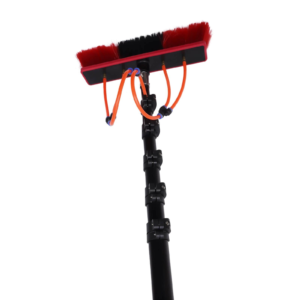
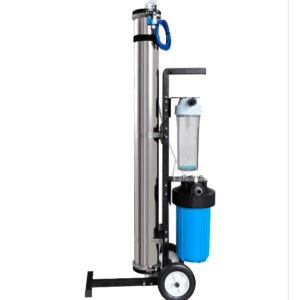
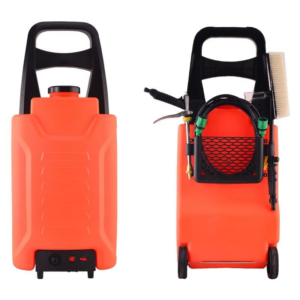
A water-fed pole purchase starts with a practical question: will this complete setup work for the jobs your team actually does?
A maximum-length claim, a carbon-fiber label and an attractive unit price are useful starting points. A purchasing decision also needs a defined application, compatible components and a sample evaluation.
For cleaning contractors, distributors and procurement teams, here is a step-by-step buying framework.
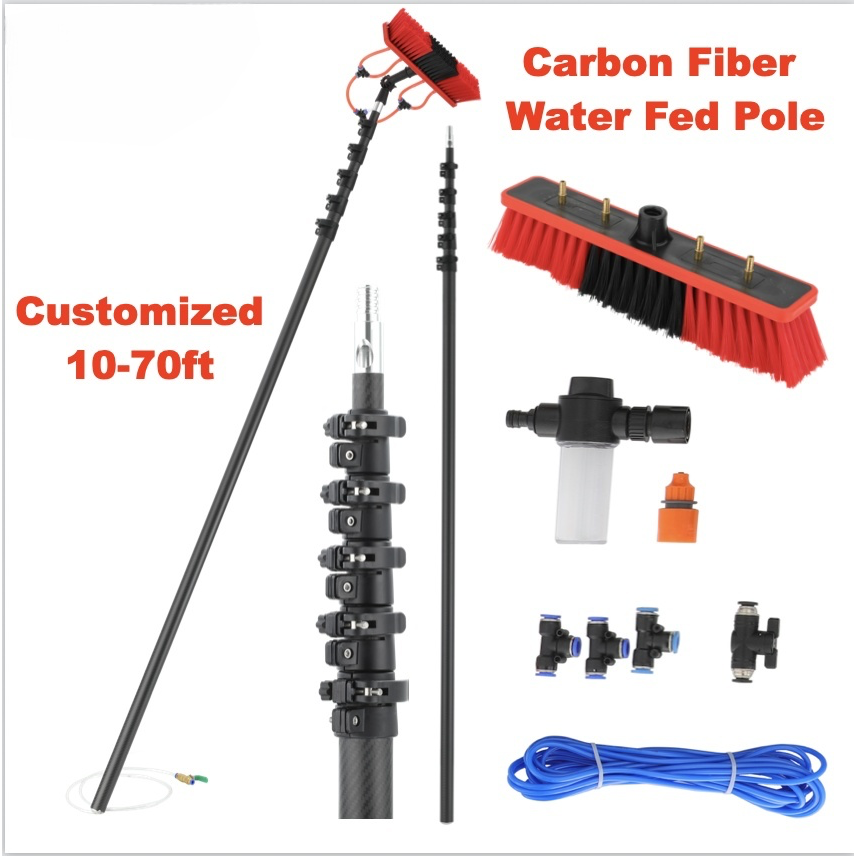
Choosing a water-fed pole setup means defining the job first (surface, reach, frequency), then requesting the same six comparable specifications from every supplier — extended/collapsed length, weight, rigidity basis, connection chain, water-supply requirements and ownership costs — before evaluating a sample under your actual working conditions.
How do you define the job before choosing the pole?
Write a short application brief: the surface to be cleaned, routine operating height, access restrictions, cleaning frequency and available water supply. Include transport and storage limits.
Separate everyday work from occasional high-reach work. Ask whether one configuration can serve both effectively, or whether separate setups deserve evaluation. Do not translate building storeys into a fixed pole length.
For coated glass, cladding or solar panels, confirm the surface manufacturer’s cleaning instructions before selecting a brush or cleaning method.
How do you turn headline specifications into comparable information?
Ask each supplier to quote the same six items: actual extended length, collapsed length, weight, rigidity information, connection details and water-supply requirements.
Keep actual pole length separate from advertised working reach. Request the measurement endpoints and clarify whether the brush and adapter are included. For weight, distinguish the bare pole from the working kit and record hose length and whether the stated weight is dry.
Material descriptions alone do not establish how two finished poles will perform. Compare the exact models and configurations you intend to buy, including their trade-offs in rigidity, weight and robustness.
How do you specify the brush, adapter and connection chain?
List every part from pole tip to brush, including the adapter or gooseneck, locking mechanism, jet fittings and hose connections. Request exact model references and written compatibility confirmation.
Two fittings that look similar may still have different threads or locking arrangements. Do not approve a combination from a photograph alone.
Choose brush width, bristle type and jet arrangement for the intended surface and task. Include the actual brush and adapter in your sample evaluation; a bare-pole demonstration does not show the complete working setup.
How do you plan water delivery as part of the purchase?
Confirm the source water, required water quality, hose inner and outer diameter, total hose run, valve arrangement and intended brush jets.
Water treatment and a pump are configuration-dependent. A portable tank unit, a direct supply and a vehicle-based system can require different arrangements. Poles, brushes and water treatment should be evaluated as parts of a wider cleaning system.
When a supplier quotes flow or pressure, ask where it is measured and under what operating conditions. A source or pump rating alone does not establish delivery at the brush. Request a demonstration using the proposed hose, fittings and jets.
How do you evaluate the sample under repeatable working conditions?
Use the same extended length, brush, adapter, working angle, hose routing and water conditions when comparing samples. For a practical handling trial, keep the operator and hand positions consistent.
Ask the operator to extend and retract the pole, move the brush, change direction and stop. Record observations about control, unwanted rotation, section movement, hose drag and access to the valve. Follow the manufacturer’s adjustment instructions.
A handling trial provides useful operational feedback; it is not a quantified stiffness test. If numerical rigidity or deflection claims matter to the purchase, request the test method, support arrangement, load, measurement point and results.
Safety note: carbon-fiber poles conduct electricity. Inspect the work area for overhead power cables and follow the equipment manufacturer’s safety instructions.
How do you compare ownership costs and service support?
Request an itemized quotation showing what is included, optional and excluded. Check the availability and pricing of replacement sections, clamps, end caps, adapters, hose and brush parts.
Ask who handles warranty claims, what evidence is required and how replacement parts are supplied in your market. Include freight, consumables and likely service needs in your comparison rather than comparing pole prices alone.
For distributors, also confirm model identification, packaging, product documentation and which spare parts should be stocked for customers.
How do you agree on the sample and order specification?
Before a bulk order, record the approved model, configuration and sample reference. Define the inspection checks and acceptance criteria with the supplier instead of relying on a general “same as sample” description.
Confirm component substitutions require approval. Keep the specification sheet, compatibility information, packing list and operating instructions together so the purchasing team and operators work from the same information.
A Quotation Request You Can Reuse
“Please quote a complete water-fed pole setup for [surface/application] and [required reach]. Include actual extended and collapsed lengths, bare and kit weights, brush and adapter models, connection details, hose dimensions and length, water requirements, spare parts, warranty terms and sample lead time. Please identify all exclusions and provide the conditions behind any performance claims.”
The strongest buying decision connects the job, the specification and the sample evaluation.
Specification Checklist at a Glance
Use this table when requesting quotations, so every supplier answers the same questions in a format you can compare side by side.
| Specification | What to Ask For | Why It Matters |
|---|---|---|
| Length | Actual extended length, collapsed length and measurement endpoints | Advertised “working reach” can differ from the physical pole length |
| Weight | Bare-pole weight and complete-kit weight, with hose length noted | A dry bare-pole figure does not reflect the working weight with brush and hose attached |
| Rigidity | Test method, support arrangement, load and measurement point behind any numeric claim | A material name alone does not establish how a finished pole performs at full extension |
| Connection chain | Exact model references for adapter, locking mechanism, jet fittings and hose connections | Similar-looking fittings can have different threads and are not interchangeable by default |
| Water supply | Required water quality, hose diameter, hose run and valve arrangement | Flow and pressure claims depend on where they are measured, not on the pump or source rating alone |
| Spare parts and warranty | Pricing and lead times for sections, clamps, end caps and connectors; warranty claim process | Ownership cost includes service support, not only the initial pole price |
What questions do buyers ask when choosing a water-fed pole setup?
What is the difference between pole length and working reach?
Pole length is the physical measurement of the extended or collapsed pole. Working reach can include the operator’s arm extension and is not always the same figure. Request the measurement endpoints so you compare like for like across suppliers.
Should I compare bare-pole weight or complete-kit weight?
Both, but keep them separate. A bare-pole dry weight does not reflect the working weight once the brush, adapter and a length of water-filled hose are attached. Ask suppliers to quote both figures for the exact configuration you intend to use.
What should a complete water-fed pole quotation include?
An itemized quotation should state the exact model, actual lengths, bare and kit weights, included brush and adapter models, connection and hose details, water requirements, spare-parts pricing, warranty terms and sample lead time, with any exclusions identified.
How should I evaluate a sample pole before placing a bulk order?
Test the sample with the actual brush, adapter and hose you intend to order, at the same extension, angle and water conditions you will use in service. Record the operator’s feedback on control and handling, and keep the approved configuration as your order reference.
Are water-fed poles safe to use near overhead power lines?
Carbon-fiber and aluminum poles can both conduct electricity. Inspect the work area for overhead power cables before starting, and follow the equipment manufacturer’s safety instructions at all times.
Can one pole configuration cover both routine work and occasional high-reach jobs?
Sometimes, but this should be evaluated rather than assumed. Define your routine operating height separately from occasional extended-reach needs, and ask the supplier whether one configuration realistically serves both or whether a second setup is worth considering.
What spare parts should I check availability for before ordering?
Confirm pricing and lead times for replacement pole sections, clamps, end caps, hose connectors and brush parts. For distributors, also confirm which spare parts are recommended to stock locally for customer support.
Build the Right Water-Fed Pole Setup
Explore our water-fed poles, pure water systems and compatible accessories. Add the products you need to your wishlist, then request a quotation for a complete working configuration.