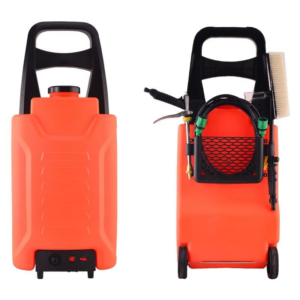
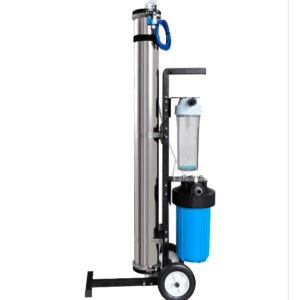
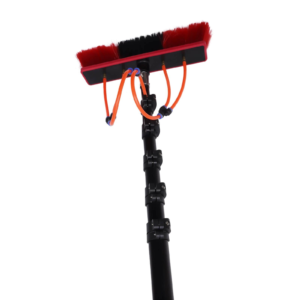
Connector mismatches in water-fed cleaning kits usually come down to confusing thread families (BSPP, BSPT, NPT), mixing up tube OD with pipe thread size, or assuming a seal location without checking the manufacturer’s instructions. Confirm both mating ends, the thread standard and the sealing method before ordering — a connector photograph is not enough to specify a part.

Understanding connector and thread standards helps you specify a complete water-fed pole system. This guide compares BSPP, BSPT and NPT, explains tube and hose dimensions, and provides a supplier checklist. A connector can look right, start to screw in and still be the wrong part. In a water-fed cleaning setup, that mismatch can cause a loose brush, an unreliable water connection or an avoidable delay on site.
The purchasing question is not simply “What size is it?” It is: which two parts must connect, how are they retained, and where—if water passes through the joint—does the seal form?
This guide covers pole and brush attachments, tube fittings and water-supply connections. It does not identify the thread standard of any product from a photograph.
How do you separate tool attachment from water connection?
The mechanical attachment connects the pole tip, angle adapter and brush socket. It must retain the tool in its intended working position.
The water connection joins the hose, valve, equipment ports and brush outlets. It must retain the tubing and seal under the specified operating conditions.
Some products combine these functions, but many do not. A brush mounting thread may carry no water at all. Do not apply plumbing sealant to a tool attachment merely because it has threads.
Record the part number at both sides of each interface. An angle adapter can have different connections at its two ends, so “adapter included” is not a complete specification.

How do BSPP, BSPT and NPT pipe thread standards compare?
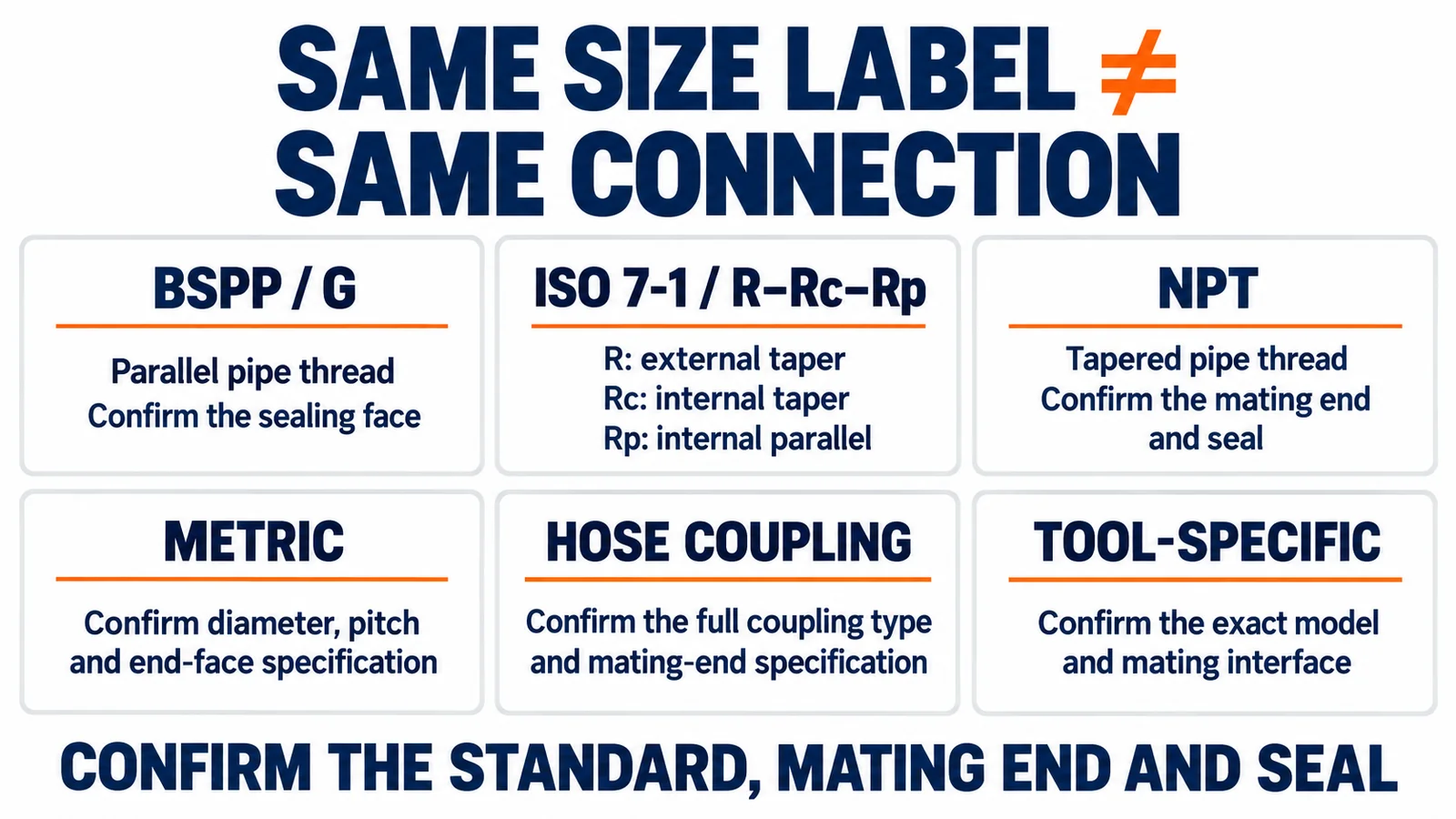
These names describe different families, not interchangeable alternatives:
- BSPP / G: Parallel pipe thread, associated with ISO 228-1. Confirm the separate sealing face, washer, O-ring or other specified seal.
- BSPT / ISO 7-1 connections: Confirm the exact designation: R is an external tapered thread; Rc an internal tapered thread; Rp an internal parallel thread intended for the specified mating arrangement. Do not treat Rp and G as equivalent.
- NPT: Tapered pipe thread under ASME B1.20.1. Do not mate it to BSP just because the nominal size matches.
- Metric screw thread: Record the full designation, including diameter and pitch, plus the required fit and connection design. “Metric” alone is insufficient.
- Garden-hose connection: Confirm the regional standard and actual mating ends. Hose coupling threads have their own specifications.
- Tool-specific or proprietary connection: Obtain the manufacturer’s drawing and compatible model list; a trade name is not a complete dimensioned specification.
BSP thread forms use a 55° angle, while NPT uses 60°. Nominal pipe size is not the measured outside diameter. The thread family and the end connection’s sealing geometry both matter. Swagelok thread and end-connection identification guide.
ASME lists pipe threads and hose-coupling threads separately. A familiar inch label does not make a garden-hose connector an NPT connector. ASME hose-coupling thread standard.
Should you treat “Euro,” “Acme” and “quick-connect” as exact specifications?
When a pole quotation uses “Euro thread,” “Acme” or “universal,” request the actual thread designation or dimensioned drawing and the exact mating brush or adapter.
Where a recognised standard applies, ask the supplier to name it. Where the interface is proprietary, record the manufacturer, series, version and mating part number.
“Quick-connect” describes a method of connection, not a guarantee of interchangeability. Check the plug profile, socket, locking mechanism and seal arrangement. Also confirm whether a water coupling contains a shutoff valve and how it affects the intended flow.
Keep tool-release systems separate from water-line couplings in the parts list. A locking tool socket and a push-fit tube connector solve different problems.
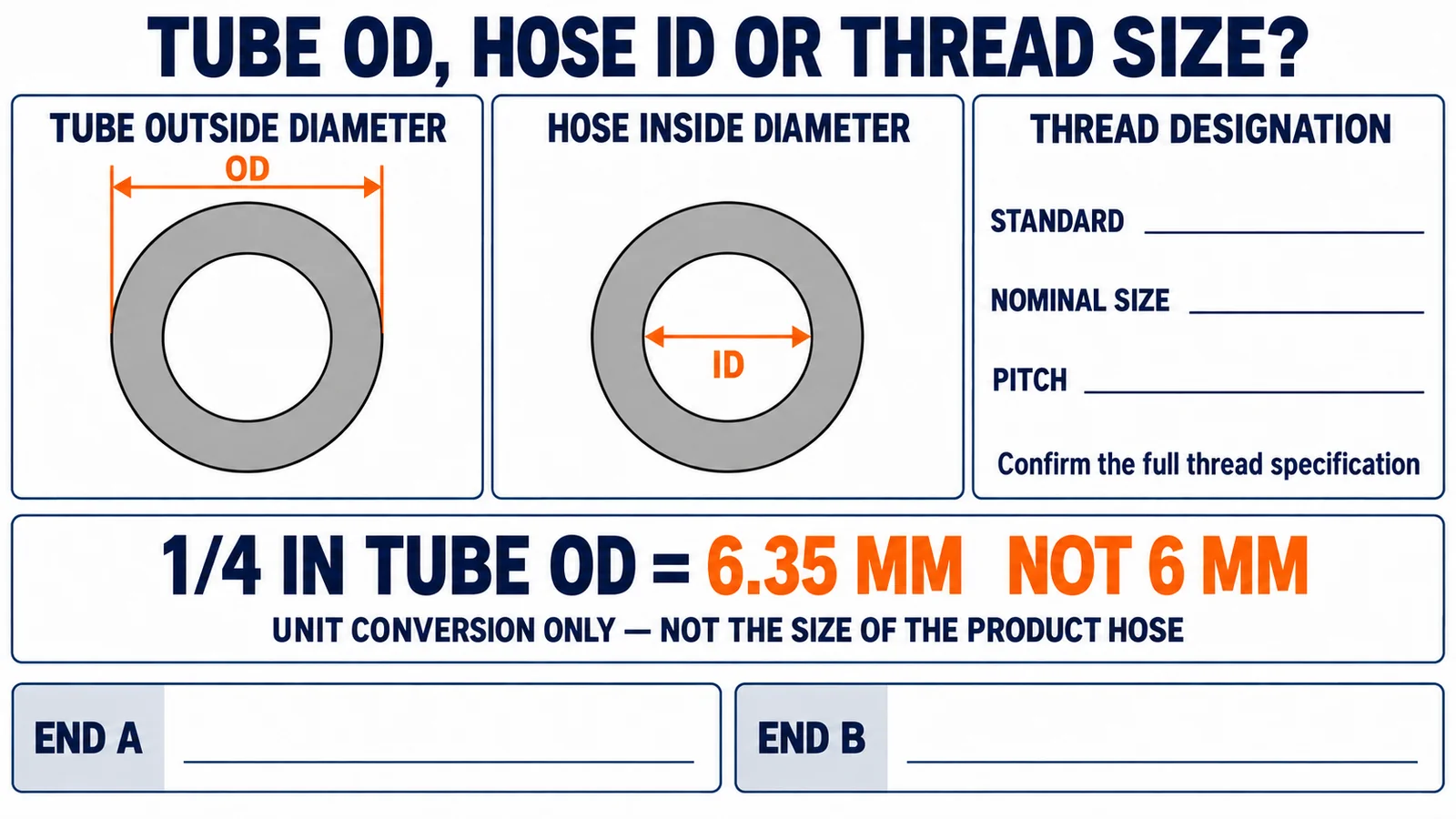
What is the difference between tube OD, hose ID and pipe thread size?
For a push-fit tube connection, identify the required tube outside diameter, material and tolerances. For a hose barb, confirm the specified hose inside diameter, wall construction and retention method.
For example, 1/4-inch tube OD is 6.35 mm; it is not 6 mm. Neither description means “1/4-inch pipe thread.”
Manufacturers may list both sizes on one adapter. John Guest, for example, lists an adapter as 6 mm tube OD by 1/4-inch SuperThread. Those two dimensions describe different ends of the part, not equivalent diameters. The named thread system must still be checked against its instructions. John Guest adapter specifications.
Ask for a labelled drawing such as “End A: tube connection; End B: threaded connection.” State units beside every dimension.
How do you identify the seal before choosing a sealant?
Threads can provide retention while a washer, O-ring or seat provides the water seal. Other specified connections seal at the threads.
Follow the exact fitting manufacturer’s instructions for seal type, preparation, tightening and any approved sealant. Do not assume every threaded joint needs PTFE tape. Extra tape will not correct an incompatible thread, damaged seat or missing seal.
Confirm body and seal materials against water quality, temperature, cleaning chemicals if used and the equipment’s operating limits. A matching thread alone does not establish the pressure rating of the assembly.
Specify the working pressure and where it is measured. Avoid ordering from a pump’s maximum-pressure figure alone.

How do you verify a sample without forcing a fit?
Use drawings, part markings, calipers and an appropriate thread-pitch gauge to narrow identification. Photographs help show the overall shape and condition; they do not establish pitch, tolerance or a pressure-tight match.
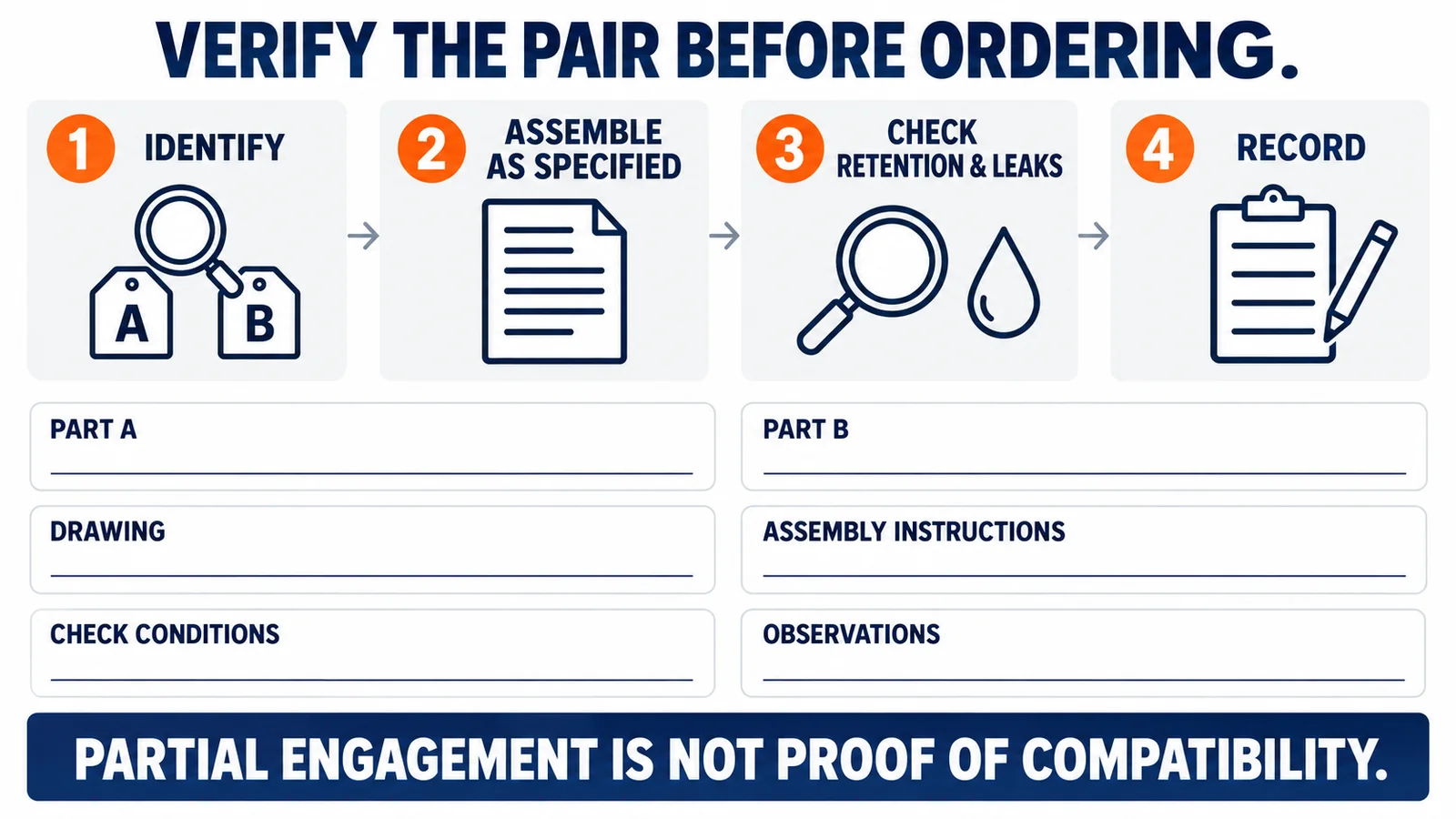
Do not force a questionable pair together. A few turns of engagement are not acceptance evidence.
With the correct parts identified, assemble according to the applicable instructions. Check mechanical retention using the intended brush, adapter and working extension. Verify water connections through the equipment manufacturer’s prescribed leak and operating checks, with the real hose and outlet arrangement.
Isolate and depressurise the water supply before disconnecting or changing fittings. Do not improvise a pressure-test method or use compressed air simply to make checking quicker.
Record the sample references, assembly instructions, conditions and observations. Agree acceptance checks before placing the production order.
Why should both ends of every connection be in the quotation?
Ask the supplier to complete the connection schedule below, including both mating ends, the assembly instructions and the applicable operating conditions.
Do not allow an unspecified “equivalent connector” to replace an approved interface. Record proposed substitutions and confirm them before shipment.
A reliable order identifies the mating pair, the sealing or locking method and the conditions in which it will be used. That is more useful than a connector photograph or a promise of universal compatibility.
Preparing a water-fed cleaning kit? Send the pole, brush and equipment model numbers, photos of both mating ends, available drawings and hose specifications so the complete connection can be reviewed before ordering.

Specify both ends — copyable connection schedule
| CHECK | END A | END B |
|---|---|---|
| PART NUMBER | ||
| CONNECTION STANDARD | ||
| SIZE & PITCH | ||
| MALE OR FEMALE | ||
| TUBE OD OR HOSE ID | ||
| SEAL & RETENTION |
| OPERATING CONDITIONS | |
|---|---|
| MATING PAIR CONFIRMATION | |
| SAMPLE REFERENCE |
RECORD APPROVED PARTS AND AGREED CHANGES.
Frequently asked questions
Can BSP and NPT be connected directly?
Do not treat them as interchangeable. Specify a purpose-made adapter with each end identified and rated for the application.
Does a 1/4-inch connector fit 6 mm tubing?
Not by that description alone. Confirm whether 1/4 inch refers to tube OD, pipe thread or another feature. A 1/4-inch tube OD is 6.35 mm.
Can a photo identify the thread?
A photo supports identification but does not establish dimensions, pitch, tolerance or the sealing arrangement. Request the drawing and mating part references.
Does every thread need PTFE tape?
No. Follow the fitting instructions. A connection sealing at a washer, O-ring or seat may have different requirements from one sealing at its threads.
Are the photographed adapters confirmed as BSP, NPT or metric?
No standard is assigned to a product solely from its appearance. Confirm the exact supplied model and documentation.
Plan your complete cleaning setup
Browse our water-fed cleaning equipment and contact the team with your mating-part specifications to discuss the configuration before ordering.